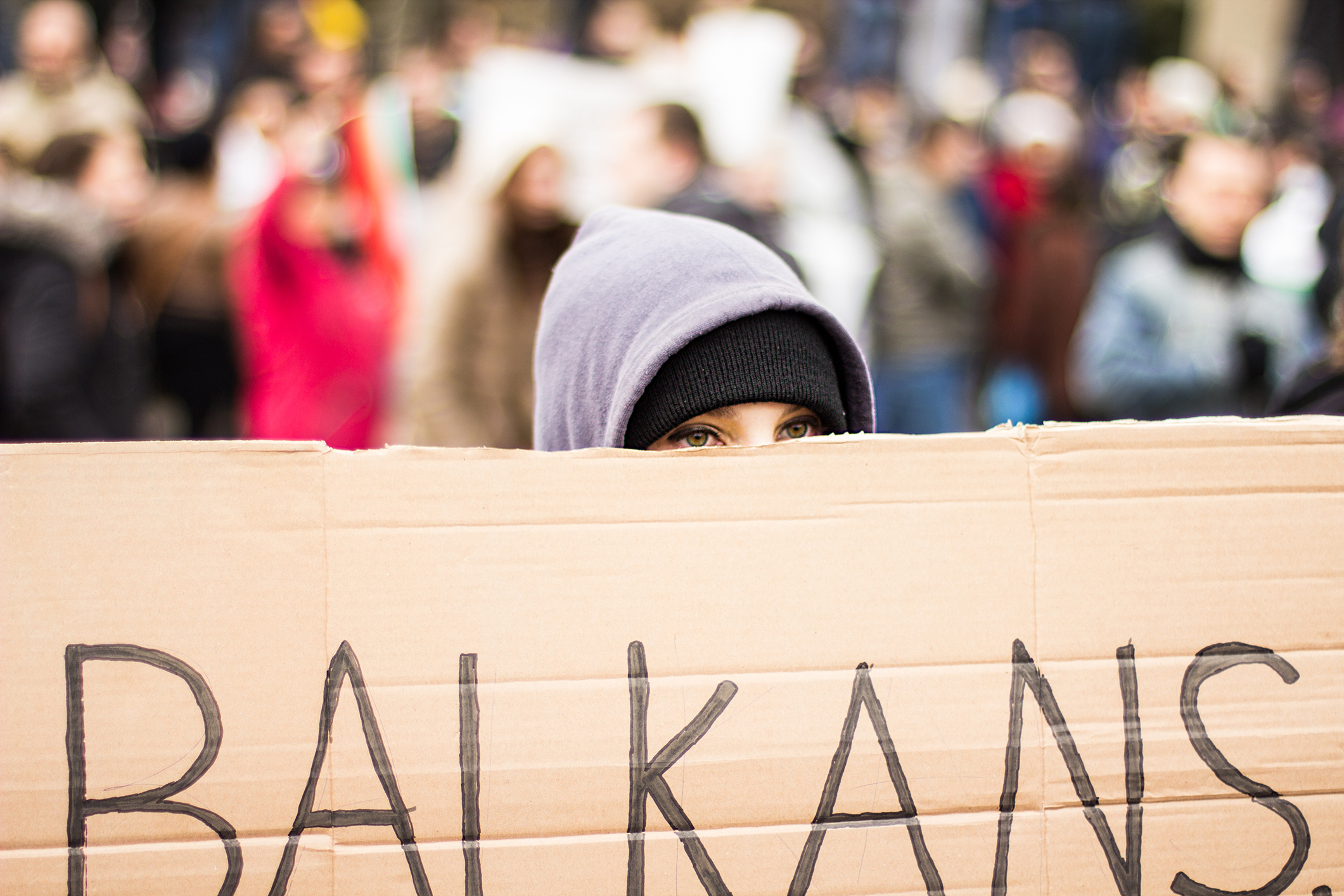
Dynamics of Protest Waves in Eastern Europe

Dr. Ivaylo Dinev (ZOiS)

Description

The database Dynamics of Protest Waves in Eastern Europe is an individual project of the DataLab. The main aim is to combine data from various sources, publications, books and datasets with a focus on mass protest mobilisations in Eastern Europe, Southeast Europe, Central Asia and the Caucasus in the last four decades.

Key questions

What characterizes the long-term dynamics of contentious politics in Eastern Europe from a comparative perspective in terms of repertoires, actors, aims and outcomes?

Methodology and sources

Coding procedures and techniques will employ the protest event analysis (PEA), a type of quantitative content analysis method.

Results

How Protest Waves Change Politics in Southeast Europe

This project made a major theoretical and empirical contribution to the study of contentious politics. Its principal result was the development of the concept of protest democracy to explain how recurring protest waves function as a durable mechanism of political accountability and party competition in contexts of weak representation and low institutional trust. This framework was grounded in an original data set of major protest waves in Southeast Europe (1980–2025), which provided the first systematic regional mapping of mass mobilisations and their political consequences. The project further substantiated the concept through an in-depth, process-tracing analysis of Bulgaria’s December 2025 protest wave, combining quantitative evidence with interviews with activists and experts to identify the mechanisms linking protest mobilisation to executive turnover, political realignment, and the emergence of new political actors. By integrating comparative regional evidence and qualitative case-study analysis, the project established protest waves as a central unit of analysis for understanding long-term political change and demonstrated the explanatory value of the concept of protest democracy beyond individual protest events.

Project team

Dr. Ivaylo Dinev

Ivaylo Dinev is a political scientist and, since April 2022, a postdoctoral researcher at ZOiS, where he coordinates the Multi-Method Data Laboratory of the KonKoop research network.

He holds a doctoral degree in Political Science from the joint doctoral initiative of Sant’Anna School of Advanced Studies, University of Siena, University of Pisa and University of Florence. Prior to that, he completed BA and MA at Sofia University in Southeast European Studies and Cultural Anthropology. In the last five years, he did fellowships at the Centre for Advanced Study (Sofia) and Centre for Southeast European Studies (University of Graz), and taught a course on civil society and social movements at the University of Florence. Before joining ZOiS, Ivaylo Dinev worked as a researcher at the Institute for Social and Trade Union Research in the Confederation of Independent Trade Unions of Bulgaria and as a postdoctoral researcher at Sofia University. During his doctoral studies, he examined development and variations of protest cycles in Bulgaria and Slovenia by employing a comparative-historical approach based on the triangulation of original protest event dataset with qualitative data.

Related Publications

Why Bulgaria Became a Success Story for the Gen Z Protests

When Protest Becomes a Mode of Politics

Bulgaria—Protest Movements Transforming the Party System

The Student Revolt in Serbia: Vučić’s Nemesis?

Protest event data sets on Eastern Europe, the Caucasus and Central Asia

Protest Vote, Protest Parties and Movement Parties: Conceptualisation and Trends

Related Events

Other projects and workshops

C1_C4_SvL_Tiraspol2019
E5
C1_C4_SvL_Tiraspol2019
F4_Tbilisi_Darieva